
I love seeing wildlife when I travel. Whether it’s spotting animals while hiking or going on a guided wildlife tour, it’s always exciting to see animals in their natural habitats.
But I’ve also participated in wildlife tourism that I now regret.
In 2016, I visited an elephant sanctuary in Cambodia. At the time, I genuinely believed I’d made a responsible choice. I’d researched the sanctuary, knew elephant riding was harmful, and specifically chose a place that didn’t allow it.
During my visit, though, I fed the elephants, touched them, and helped bathe them in a river. Looking back, I wish I’d questioned those activities as carefully as I’d questioned riding.
That experience is part of why I’ve spent the last few years learning about responsible wildlife tourism. I’ve come to understand that an attraction can appear ethical while still offering experiences that raise serious animal welfare concerns.
And figuring out which wildlife experiences to support isn’t always straightforward, especially when we’re relying on tour operators to tell us how their animals are treated.
In this guide, I’m sharing the advice I use when researching wildlife tourism experiences today. I’ll cover how to identify potentially harmful attractions, what to look for in an ethical animal sanctuary, and why the choices we make as tourists matter.
These are the 10 things I recommend considering before booking a wildlife experience.
- 1. Choose Wildlife Observation Over Animal Interactions
- 2. Research Animal Attractions Before Booking
- 3. Don’t Assume an Animal Sanctuary Is Ethical
- 4. Read Reviews Carefully, Especially the Negative Ones
- 5. Keep Your Distance From Wildlife
- 6. Never Feed Wild Animals
- 7. Be Thoughtful About Wildlife Selfies and Social Media
- 8. Choose Guides Who Understand Wildlife
- 9. Consider How Wildlife Tourism Affects Local Communities
- 10. Be Cautious of Buying Wildlife Products
- My Elephant Sanctuary Experience in Cambodia, and Why I Regret It
- Can Wildlife Tourism Be Good for Conservation?
- How Can You Tell if a Wildlife Tourism Experience Is Ethical?
- How to Make More Responsible Wildlife Tourism Choices

1. Choose Wildlife Observation Over Animal Interactions
My most important recommendation is to choose wildlife experiences where you can observe animals from a distance, without approaching or touching them.
This gives animals the space to engage in their natural behaviours, without being interrupted or disturbed by tourists. Of course, observation-only experiences aren’t automatically ethical either. Even watching wildlife can cause harm if animals are crowded, chased, or repeatedly disturbed.
I think avoiding direct interactions is especially important when it comes to wild animals being kept in captivity.
Attractions that offer elephant bathing, tiger selfies, or opportunities to hold wild animals may seem harmless, particularly when they’re advertised as educational. But we need to think about what makes those interactions possible in the first place.
Wild animals don’t naturally behave the way tourists expect them to during these encounters. To reliably allow people to touch, bathe, or pose with them, animals generally need to be trained, conditioned, or controlled to tolerate human contact.
Depending on the facility, that training can involve coercion, punishment, or other practices that compromise animal welfare. And it might not even look harmful to tourists.
Something as seemingly innocent as coaxing an animal with food can be used to encourage behaviours that serve the tourist experience rather than the animal’s needs, and natural behaviours.
Even when an animal appears comfortable around people, that doesn’t necessarily mean the interaction is beneficial or that the animal has a meaningful choice about participating.
The ABTA Animal Welfare Guidelines classify several activities as unacceptable, including elephant contact and feeding without a barrier, interactions with wild cats, and tourist photo opportunities where animals can’t choose to move away.
My approach these days is pretty simple: if a wildlife experience involves getting close enough to touch a wild animal, I question why that contact is necessary. The safest bet is to choose wildlife experiences that are observation-only.

2. Research Animal Attractions Before Booking
I know how easy it is to see a wildlife experience advertised online and immediately want to book it.
We see animal encounters going viral on social media all the time. A video of a tourist walking alongside lions in Zambia, for example, can rack up millions of views. People see these experiences, think about how incredible it would be to do the same thing, and start looking into booking one themselves.
But it’s important to do some basic research before booking an animal attraction, because what we see on social media, or in an ad, isn’t the full picture.
I start by looking at the operator’s website and reading exactly what visitors will be doing. If the itinerary mentions feeding, bathing, cuddling, riding, or posing with wild animals, that’s a reason for me to investigate further.
I also want to understand how the animals came to be there. Questions I consider: Were they rescued from harmful conditions? Are they being bred for tourism? Does the organization have a rehabilitation program? Are animals released into the wild when that’s appropriate and possible?
I’d be cautious about any attraction that describes itself as supporting conservation but doesn’t explain which projects it supports or how its money is spent.
One resource I recommend for researching wildlife experiences is World Animal Protection Canada’s animal-friendly travel guidance. For elephant tourism specifically, World Animal Protection also publishes an Elephant-Friendly Tourist Guide that assesses venues and explains what responsible elephant experiences should look like.

3. Don’t Assume an Animal Sanctuary Is Ethical
This is probably the biggest lesson I took away from my experience in Cambodia. The word “sanctuary” doesn’t automatically mean an animal attraction is ethical.
A facility might describe itself as an elephant sanctuary, wildlife rescue centre, or animal rehabilitation project. Those descriptions sound reassuring, particularly to those of us who already care about animal welfare.
But the name alone tells you very little about the standard of care being provided. The Global Federation of Animal Sanctuaries explains that animal sanctuary care is poorly regulated in many places. Its accreditation and verification programs are designed to help identify organizations meeting established animal care and operational standards.
When researching a sanctuary, I look for information about:
- Where the animals came from and why they’re in captivity.
- Whether the facility breeds animals or acquires them for commercial purposes.
- How much space animals have and whether they can engage in natural behaviours.
- Whether visitors are allowed to touch, feed, or handle the animals.
- What veterinary care is available and how the organization funds its work.
- Whether the facility has independent accreditation or credible outside assessments.
I also think it’s worth asking what purpose the facility serves beyond attracting tourists. Would its work continue if visitor numbers dropped? Does it have a clear animal welfare or conservation mission?
I wouldn’t book a sanctuary based on its website alone. I’d want to see some independent information about how it operates, too.
4. Read Reviews Carefully, Especially the Negative Ones
Reviews can be super helpful when researching wildlife tourism, although I wouldn’t rely on them alone. I usually start with the most recent reviews and then spend time reading the one-star and two-star ratings.
I’m looking for specific descriptions of how the animals were treated. I find that when previous visitors take notice of unethical conditions, they’ll often go to the reviews to share what they observed.
Did someone notice animals being chained for long periods? Were visitors encouraged to touch animals despite being told the experience was observation-only? Did the guide appear to prioritize getting photos over animal welfare?
Positive reviews are worth reading, too. But I keep in mind that most tourists aren’t animal welfare experts. A reviewer might describe an elephant as happy because it approached visitors or accepted food. That doesn’t necessarily tell us anything reliable about the elephant’s welfare, because most of us aren’t equipped to recognize signs of happiness (or signs of stress) in a wild animal.
I also check whether a venue has changed its practices recently. An older review might describe activities that are no longer offered, while a newly introduced hands-on experience could be missing from reviews written a few years ago.
5. Keep Your Distance From Wildlife
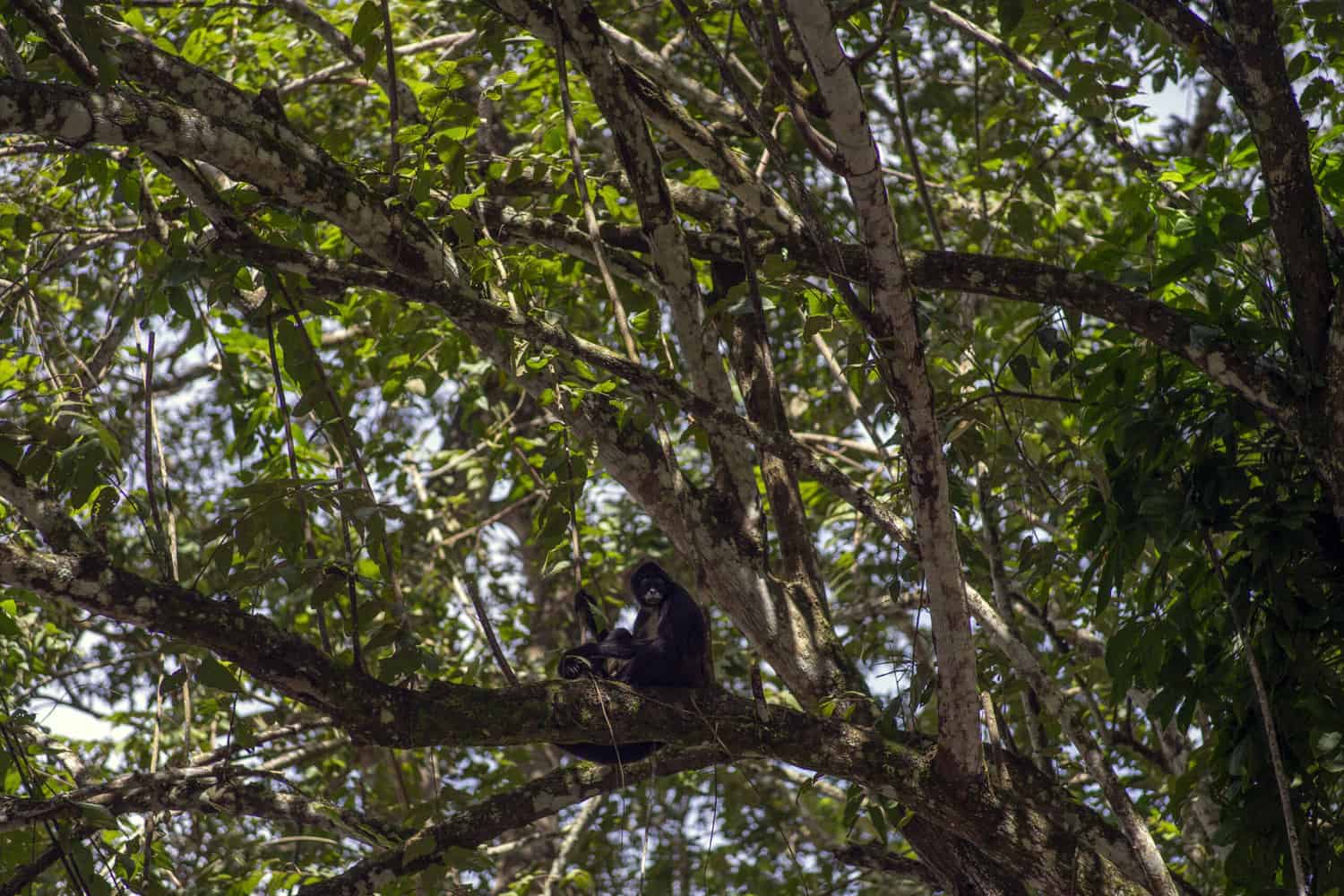
One of the easiest ways to practise responsible wildlife tourism is to give wild animals space. This applies whether you’re watching monkeys in a city, spotting wildlife on a hike, or joining a guided safari.
Getting too close can interrupt an animal’s normal behaviour. It can also create dangerous situations for tourists and the animals themselves.
One rule of thumb? If an animal changes its behaviour because of your presence, that can be a sign you’re too close.
I think this is especially important to keep in mind when you’re trying to capture photos or videos. I know how tempting it is to get a great wildlife photo, especially when you’ve spent money travelling somewhere specifically to see a certain species.
But I don’t think any photo is worth putting an animal under unnecessary stress. Cameras and phones have great zoom capabilities these days, so if getting good photos and videos is important to you, I recommend investing in technology that allows you to zoom in rather than get physically close to an animal.
And lastly – if a guide encourages you to approach an animal more closely than you’re comfortable with, it’s completely reasonable to say no.
It’s worth remembering that on paid wildlife experiences, like safaris, guides can feel pressure to “deliver” sightings and memorable encounters. They know tourists have paid to see wildlife, and that their experience might influence reviews and tips. Sometimes that pressure can lead guides to get closer to animals than they should.
You can always let your guide know at the beginning of a tour that you’d prefer to observe wildlife from a respectful distance, even if that means missing out on a closer look or a better photo.

6. Never Feed Wild Animals
Food is often deliberately used to coax wild animals into approaching tourists, whether that’s to get a photo or create a closer encounter. I’ve seen this all over the world.
For example, monkeys in popular tourist areas around South East Asia are offered bananas and other snacks so they’ll come close enough for visitors to take selfies.
Feeding wildlife can seem like a harmless interaction, but feeding wild animals can change their behaviour and make them more likely to approach people. Over time, animals can learn to associate humans with food, which can create dangerous situations for both the animals and the people they encounter.
This is something I think we should take seriously even when feeding wildlife seems completely normalized in a particular place. If everyone else is doing it, that doesn’t necessarily mean it’s a good idea.
It’s also worth distinguishing between feeding wild animals and the feeding that trained caregivers may provide as part of an animal’s welfare plan. The concern for tourists is participating in unnecessary feeding encounters or creating demand for them.

7. Be Thoughtful About Wildlife Selfies and Social Media
Social media has a huge influence on what people want to do when they travel. I see this all the time as a travel content creator.
Someone posts a photo of themselves walking with lions, bathing an elephant, or swimming alongside a dolphin. The image gets shared, other people want the same experience, and suddenly that interaction becomes something tourists actively seek out.
But a photo or video doesn’t provide much context. You might see a beautiful photo of someone touching an elephant without knowing anything about the animal’s living conditions or how it was trained.
That’s why I think we all have a particular responsibility when sharing wildlife experiences. World Animal Protection’s Wildlife Selfie Code encourages people to avoid photographs that involve holding, hugging, restraining, or baiting wild animals.
This is a useful principle for anyone who posts travel photos. Before sharing a wildlife encounter, I try to consider what the image might encourage someone else to do.
Would someone see this and want to recreate the experience? Could they end up booking a harmful attraction because of it?
The most responsible way to share photos and videos of wildlife is to share them with context about the encounter, and what you’ve learned. For example, when I’ve shared content of wildlife that I saw while on safari in Tanzania, I’ve often included a note mentioning that the photo or video was taken using a zoom lens.
This helps people understand that I was observing the animals from a distance, even if the photos make it look like I was much closer. I want people to know that those close-up photos were taken from a distance, because I don’t want to encourage anyone to get that close to wildlife themselves.

8. Choose Guides Who Understand Wildlife
I’ve been on wildlife tours where the guide’s knowledge was just as interesting as the animals we saw. A good guide can explain what an animal is doing, why it behaves a certain way, and how its habitat is being affected by human activity.
When researching a tour, I look for guides with relevant training or experience. I also pay attention to how an operator describes its wildlife viewing practices.
Do guides maintain appropriate distances? Are there rules about approaching animals? What happens if an animal moves away or appears disturbed?
I’d be cautious about any operator that guarantees close encounters with free-roaming wildlife. Animals don’t follow a tour itinerary, and I think a responsible guide should be comfortable explaining that sightings are never guaranteed.
I’d much rather spend a morning learning from a knowledgeable local guide and see very little wildlife than participate in an encounter where animals are pressured to provide an experience for tourists.
A good example of this is a whale watching tour I took in Hólmavík, in Iceland’s Westfjords. Our guides at Laki Tours were careful to observe the whales without chasing or crowding them.
We saw humpback whales, minke whales, and dolphins, and on the way back to shore, our guide taught us about the species we’d encountered and the conservation challenges they face.
We even got to look through a catalogue of whale tails photographed by the guides, which they use to identify individual whales that return to the fjord. I really appreciated how much emphasis the tour placed on education and respecting the animals.


Whale watching with Laki Tours in the Westfjords, Iceland
9. Consider How Wildlife Tourism Affects Local Communities
When we pay for a safari or wildlife tour, where does that money actually go? I think that’s an important question to ask, especially in places where local communities live alongside the wildlife tourists are paying to see.
Wildlife tourism can create valuable economic opportunities for these communities, through jobs and locally operated businesses. But those benefits aren’t guaranteed, and tourism can also create challenges for the people who live there.
That’s why I think it’s worth looking at who operates a wildlife experience, how tourism revenue is distributed, and whether local residents have a meaningful say in how wildlife tourism is managed. After all, they’re the ones living with the impacts of tourism long after visitors have gone home.
When I’m researching an operator, I look for information about whether they hire local guides and work with conservation organizations in the area. I also try to find out whether tourism revenue is supporting projects that benefit nearby communities.
This matters because wildlife conservation can come with real costs for communities, including restrictions on land use and conflict with animals. I try to support locally operated wildlife experiences where there’s evidence of responsible practices.
But I also think we need to be careful about assuming that every locally owned tourism business is automatically ethical, or that a foreign-owned operator can’t contribute positively.


Visiting the town of Mto Wa Mbu, just outside Lake Manyara National Park, Tanzania
10. Be Cautious of Buying Wildlife Products
Responsible wildlife tourism also extends to what we purchase while travelling. Souvenir shops sometimes sell products made from animal parts, including ivory, turtle shell, or coral.
The problem is that demand for these products can contribute to wildlife exploitation, including poaching and the illegal wildlife trade. Animals may be killed specifically for their tusks, shells, or other body parts, while harvesting coral can damage marine ecosystems that countless species depend on.
Some of these souvenirs may also be illegal to trade or transport across international borders, particularly when they involve protected species. Just because something is openly for sale doesn’t mean it’s legal to bring home.
My recommendation is to avoid souvenirs made from threatened wildlife and be cautious about purchasing animal-derived products when you can’t verify how they were sourced.
I’ve written more about this in my guide to responsible souvenir shopping.
My Elephant Sanctuary Experience in Cambodia, and Why I Regret It
In 2016, I travelled to Southeast Asia for the first time. Like a lot of young backpackers, I was really excited about the possibility of seeing elephants.
I already knew that elephant riding was harmful, and I’d heard that tourists should research sanctuaries carefully. So that’s what I thought I was doing.
My friends and I booked an overnight experience at an elephant sanctuary in northern Cambodia. The itinerary included an afternoon with the elephants, a night sleeping in hammocks in the jungle, and a full-day jungle trek the following day.
The sanctuary was focused on helping elephants that had previously been used for work. The elephants had room to roam in the jungle, riding wasn’t permitted, and the time visitors spent with them was limited.
There was also an educational component to the experience. Staff talked about the elephants’ histories and the realities of keeping elephants in captivity.
At the time, all of that made me feel confident about my choice. But I didn’t consider the fact that we would be encouraged to interact directly with the elephants. While at the sanctuary, we fed them, we touched them, and we bathed them in a river.
I have photographs from that afternoon, including one where I’m standing right beside an elephant with my hand against its face. For years, I thought of those photographs as memories of a responsible wildlife experience, but now I see them differently.
What I Didn’t Understand About Elephant Tourism
The issue I’ve come to recognize is that the experience was designed around allowing tourists to interact with elephants. Even though riding wasn’t permitted, the elephants were still expected to tolerate close contact with unfamiliar people.
And that raises questions about their welfare. Elephants are large, intelligent wild animals with complex behavioural needs. When they’re kept in captivity, their welfare depends on much more than whether tourists are allowed to ride them.
They need appropriate space, opportunities to engage in natural behaviours, and care that accounts for their physical and psychological needs. The fact that an elephant tolerates being touched or bathed by tourists doesn’t tell us whether that interaction is good for the animal.
In fact, World Animal Protection specifically recommends choosing elephant venues that offer observation-only experiences. ABTA’s animal welfare guidance also identifies elephant bathing and direct tourist contact as unacceptable practices.
Learning this changed how I felt about my visit. I had focused so much on avoiding elephant riding that I hadn’t properly questioned the other activities being offered.
And if I’m being totally honest with myself, I think part of the problem was that I really wanted to see elephants up close. That desire influenced how I evaluated the sanctuary.
What I Would Do Differently Today
If I were planning that trip now, I’d spend much more time researching the sanctuary’s actual practices. I’d look beyond its marketing and seek independent assessments of its animal welfare standards.
Most importantly, I’d choose an observation-only experience.
I’d also want to understand how the elephants were cared for outside visiting hours, whether the facility had a genuine rescue or welfare purpose, and what role tourism played in its operations.
There’s some nuance here that is important. I don’t know for certain that the sanctuary I visited was entirely unethical. I could tell that the staff genuinely care about the elephants, and education was clearly an important part of their work.
And I obviously can’t claim to know how those elephants were treated behind the scenes. But I do know that the sanctuary offered direct interactions that I would no longer support.
Sharing my experience matters because so many of us make travel decisions using the information we have at the time. I’ve been learning about responsible tourism for more than a decade, and my understanding continues to change.
That means revisiting some of my own choices, including ones I once felt good about.

Can Wildlife Tourism Be Good for Conservation?
Yes, wildlife tourism can contribute to conservation.
Tourism revenue can help fund habitat protection, wildlife monitoring, and conservation work. Wildlife-related businesses may also provide employment connected to protecting natural areas.
And I think there’s value in the education that responsible wildlife experiences can provide. Seeing an animal in its habitat and learning about the challenges facing its species can help people better understand why conservation matters.
But I don’t think we should assume that an experience benefits conservation simply because it involves wildlife. A tour operator might advertise itself as conservation-focused without explaining what that actually means. When evaluating those claims, I’d look for specific information.
Does the operator contribute funding to a named conservation program? Is there evidence of habitat protection or wildlife research? Are qualified conservation professionals involved?
I also think it’s worth distinguishing between animal welfare and conservation. Animal welfare concerns the well-being of individual animals. Conservation focuses on protecting species, populations, and ecosystems.
Conservation and animal welfare are related, but they aren’t interchangeable. A facility could be doing valuable conservation research while keeping individual animals in poor conditions. That’s why I want to understand both aspects of an attraction’s work.

How Can You Tell if a Wildlife Tourism Experience Is Ethical?
There isn’t one universal checklist that can guarantee a wildlife experience is ethical. Different species have different needs, and the circumstances of a wildlife rescue centre will be different from those of a safari operator.
But there are some questions I think all of us should ask before booking.
| Questions to ask | What to look for |
|---|---|
| Can animals avoid visitors? | Animals have space and the ability to move away |
| Is physical contact offered? | Observation-focused activities with no unnecessary handling |
| Are animals performing tricks? | Opportunities to observe natural behaviours instead |
| Where did captive animals come from? | Clear information about rescue, rehabilitation, or acquisition |
| Are animals bred for tourism? | No commercial breeding to supply tourist encounters |
| Who oversees animal care? | Qualified staff and credible welfare standards |
| How is conservation supported? | Specific projects or partnerships rather than vague claims |
| Are wildlife sightings guaranteed? | Realistic expectations and respect for animal behaviour |
I’d also be cautious about operators that become defensive when you ask reasonable questions. A responsible organization should be willing to explain its practices.
If the information isn’t available, that doesn’t automatically mean the operator is doing something wrong. But it does mean you have less evidence to make an informed decision, and sometimes that’s enough reason to choose a different experience.
How to Make More Responsible Wildlife Tourism Choices
I still think wildlife experiences can be a really special part of travel, and I absolutely understand why people want to see animals. It’s part of what led me to book the elephant experience in Cambodia.
But that trip taught me how easy it is to overlook animal welfare concerns when you’re focused on an experience you’ve always wanted to have. These days, I try to approach wildlife tourism with a lot more curiosity about what happens beyond the visitor experience.
I want to know how the animals are treated when tourists aren’t around, and whether the activities being offered genuinely respect their needs.
But I also recognize that most of us are making decisions based on the information available to us. Sometimes that information is incomplete or misleading.
I’ve made choices I wouldn’t make today, and I’m sure there will be things I continue to learn. What matters to me is being willing to question those choices and change how I travel as I learn more.
If you’d like to keep learning, I’ve discussed wildlife tourism and the influence of social media with National Geographic journalist Natasha Daly on my podcast, Curious Tourism. Natasha spent years reporting on animal welfare issues in the tourism industry.
You can listen to our conversation here: Animal Tourism and Social Media’s Influence.
Read more about responsible travel:
- How to Avoid Contributing to Overtourism
- Responsible Tourism: Let’s Talk Travel Privilege
- What is Second City Tourism?
- 12 Essential Sustainable Travel Tips

